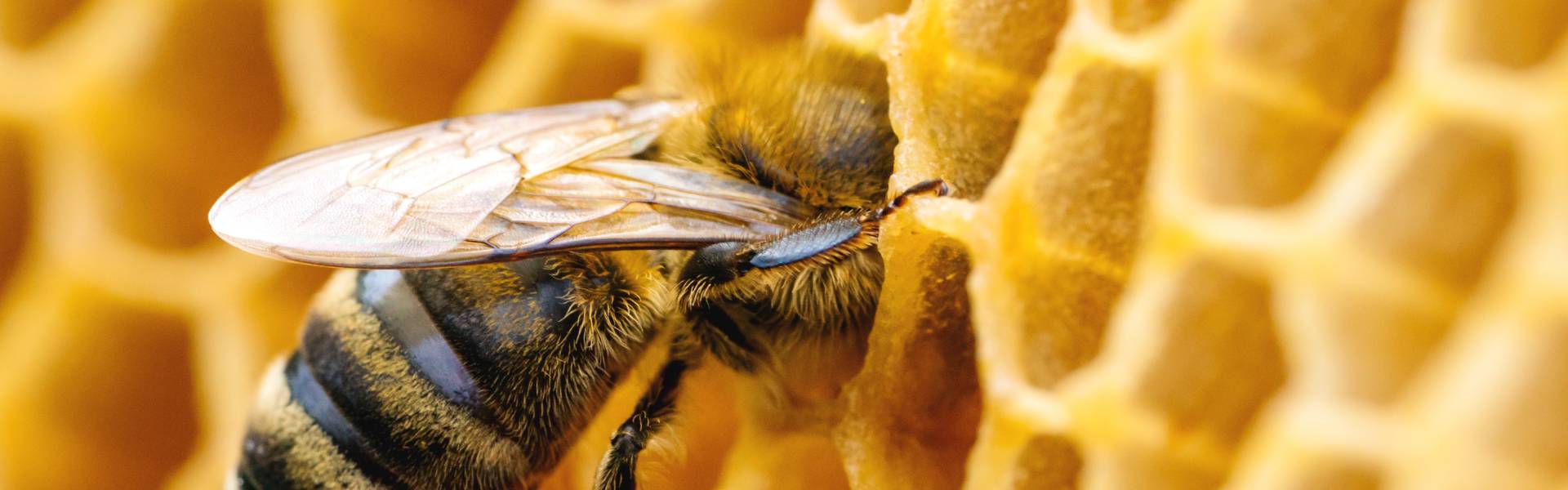
Beeswax. The name conjures images of busy bees, golden honeycombs, and a natural, earthy goodness. But beyond its poetic associations,beeswaxis a powerful ingredient with a surprising range of uses, from crafting artisanal candles to formulating soothing skincare products. Its natural composition makes it an excellent alternative tosyntheticmaterials, offering sustainability and performance in equal measure.Beeswaxcontains about 300 different chemicals that blend precisely to create unique properties.
The real magic ofbeeswaxcomes from its chemical makeup. It contains monohydric alcohols (31%), fatty acids (31%), hydrocarbons (16%), hydroxyl acids (13%), and other components like propolis and pollen. This complex structure allowsbeeswaxto function as both a structuring agent and a plasticiser— a rare combination that few natural ingredients can match.
Beeswax'sphysical behaviour makes it special. It is solid at room temperature but becomes beautifully malleable at body temperature, with a melting point of 64°C and solidifying at 63°C. The substance creates stable gel networks with oils. The viscosity and hardness are directly proportional to the amount ofbeeswaxused. Developers can create anything from hard sticks to soft balms by tweaking just a few variables.
Beeswaxhas impressive barrier properties. Unlike petroleum products that form an impenetrable barrier on skin,beeswaxcreates a breathable protective layer that locks in moisture while allowing oxygen to flow through. It repels water yet remains permeable, making it perfect for healthy skin.
Beeswaxgives formulators and crafters exceptional stability. It can remain chemically stable for thousands of years, making it both a functional and eco-friendly ingredient choice. In this article, we explore the top functional applications of beeswax, how to source the right type for specific needs, regulatory considerations in the EU and US, and its overall significance in modern industries.
Beeswax's uniqueproperties make it a sought-after ingredient in diverse industries:
This is the industry wherebeeswaxtruly shines. Its emollient and moisturising properties help to protect the skin. It forms a protective barrier without clogging pores, allowing skin to breathe. Common applications include:
Beeswaxis a preferred choice for clean-burning, long-lasting candles due to its non-toxic nature.Beeswaxcandles produce a naturally sweet, honey-like aroma.
Beeswaxfinds its way into the food industry as:
Beeswaxis used in jewellery making and other casting processes to create moulds.
Beeswaxplays a crucial role in pharmaceutical formulations, accounting for approximately 70% of the global demand for this ingredient.
Beeswaxcan be used on sticky drawers, hinges and even zippers to help them move more smoothly.
Beeswaxcan be applied to metal tools to prevent rust.
Understanding the different types ofbeeswaxavailable is crucial for selecting the most suitable option for your application. Here's a breakdown:
Yellowbeeswaxis nature's purest form that comes straight from the honeycomb with minimal processing. This is the most common type, retaining its natural yellow hue due to the presence of pollen and propolis within. The colour shifts from pale yellow to deep golden based on where bees collect their nectar. This raw form emits a sweet, honey-like scent and melts at 62-64 °C. Yellowbeeswaxcosts less than other types and is ideal for candles, wood polishes, and applications where the colour and scent are desirable.
Whitebeeswaxderives from yellowbeeswaxthat has been filtered to remove impurities and bleached to remove colour and scent, resulting in a neutral, creamy white look with just a hint of smell. It's often preferred in cosmetics and pharmaceutical applications where a neutral colour and scent are desired.
Processed to remove impurities and improve its clarity, refinedbeeswaxcan be either yellow or white in colour. It is often used in industrial applications where consistency and purity are critical.
Organicbeeswaxis sourced from beekeepers who adhere to organic farming practices, ensuring the bees are not exposed to pesticides or herbicides. It is an excellent choice for those prioritising sustainable and ethical sourcing. Certified organicbeeswaxensures compliance with stringent standards regarding pesticide use and sustainable beekeeping practices, making it a preferred choice for natural skincare and food applications.
Each type has its special use. Your final choice depends on what you need and what matters most to you ethically and aesthetically.
Regulatory requirements forbeeswaxvary considerably between the EU and US markets. Different standards apply based on intended use. Understanding these regulations is crucial before incorporatingbeeswaxinto commercial products.
US food applications classifybeeswaxas a food additive under FDA regulations. The FDA considers it GRAS (Generally Recognised as Safe) under regulation 21 CFR 184.1973. This approval ensures the product is safe for use in food. Cosmetic applications require proper labelling that complies with the Federal Food, Drug, and Cosmetic Act and the Fair Packaging and Labelling Act. These rules stipulate that ingredients must be listed in English, accompanied by health hazard warnings where necessary.
US Customs have specific rules for importedbeeswax.The product must be liquefied with slumgum and the honey removed.Beeswaxused for bee feed requires heating to 212°F (100°C) for 30 minutes.
The EU's standards are stricter through E901 certification for food-gradebeeswax.This certification ensures a contaminant-free product that's safe for food uses, such as confectionery glazing and edible coatings. EU rules state that you cannot substitute cosmetic-gradebeeswaxfor food-grade E901-certifiedbeeswax.
The EU has implemented Regulation 2023/2652 from November 29, 2024. This new rule requires all establishments that import apiculture products to register in the EU's Trade Control and Expert System (TRACES). The requirement applies to direct importers and suppliers who provide food manufacturers with apiculture products.
The EU allowsbeeswaximports for technical and cosmetic purposes if they meet these conditions:
In a nutshell, businesses working withbeeswaxmust comply with regional regulations that govern its use:
Those wanting to exportbeeswaxproducts must check both origin requirements and application-specific regulations before shipping.
The versatility, natural origins, and sustainable harvesting ofbeeswaxmake it a highly valued ingredient with a wide range of applications in cosmetics, food, pharmaceuticals, and industrial sectors. Its biodegradable, renewable nature aligns with sustainability goals, making it a key ingredient for businesses prioritising eco-conscious solutions. Choosing the correct type ofbeeswax—yellow, white, refined, or organic—depends on its intended use, while adherence to regulatory standards ensures quality and compliance.
By understanding its properties, sourcing it responsibly, and adhering to relevant regulations, you can harness the power ofbeeswaxto create high-quality products that are both effective and environmentally conscious. As industries continue to seek natural alternatives,beeswaxremains a timeless and versatile resource, shaping sustainable manufacturing and product innovation.
So, embrace the buzz and explore the endless possibilities this golden ingredient has to offer!
 Plant: Strada Quaglia, 26 - 10026, Santena (TO)Offices: NEXTTO Polo Uffici Lingotto
Legal address: Via IV Novembre 30 - 12025, Dronero (CN)
VAT: IT05583420012
ser@cere.it+39 011 94 555 11LinkedinAn Group Company